The Four Aashrams of Hinduism: A Blueprint for Life
Discover the four Ashrams (stages) of life—Brahmacharya, Grihasth, Vanaprasth, and Sannyas—an ancient Vedic framework rooted in Dharma. This life journey helps individuals live a balanced, purposeful, and spiritually fulfilling life, even in modern times.
3 min read
आहार निद्रा भय मैथुनं च सामान्यमेतत् पशुभिर्नराणाम् | धर्मो हि तेषामधिको विशेषो धर्मेण हीनाः पशुभिः समानाः ||
Eating, sleeping, fearing, and mating are common between animals and humans. What sets humans apart is dharma. Without dharma, humans are no better than animals.
To live only by instinct—eating, sleeping, and mating—is to live no differently from other animals. What distinguishes human life is Dharma: a sense of duty, responsibility, and moral order. The ancient rishis understood that without a structured path, the mind can drift into confusion and indulgence. That is why they presented the framework of the four Ashrams—Brahmacharya, Grihasth, Vanaprasth, and Sannyas. Each stage supports growth, balance, rightful enjoyment of life, reflection, renunciation, and ultimately, spiritual realisation.
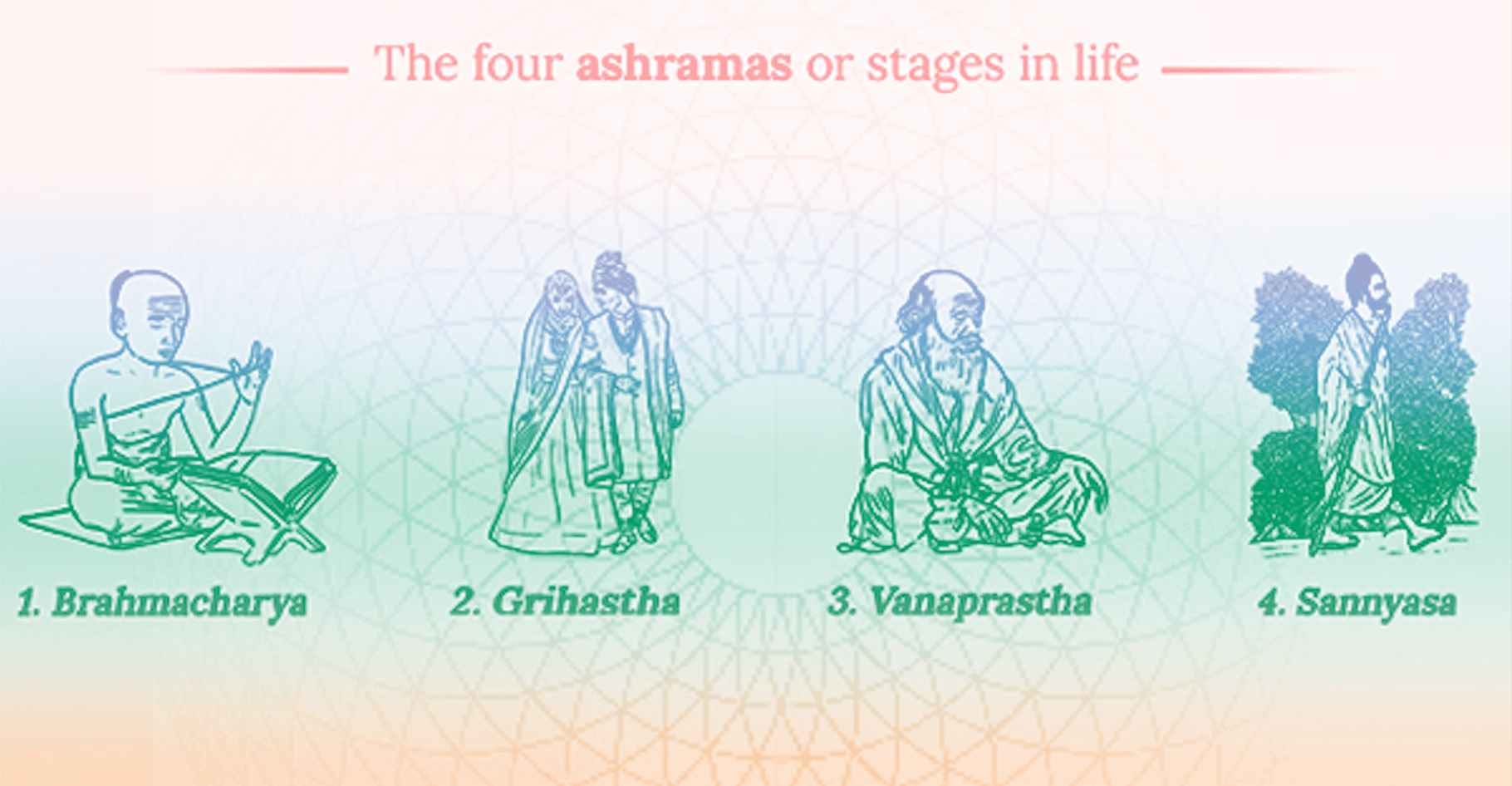
1. Brahmacharya Aashram (The Student Stage)
This foundational phase of life traditionally begins around the age of 8-12 and extends up to 21-25. Brahmacharya is dedicated to learning, self-discipline, growth and most importantly celibacy. In ancient times students would live with a guru (Gurukul/Aashram) and study the Vedas, Upanishads, philosophy, and practical skills essential for life. This stage lays the groundwork for one’s character and future. It is about shaping the mind and instilling values that support both worldly and spiritual success.
In today’s age, Brahmacharya is about cultivating focus amidst distractions, and understanding the importance of restraint in a world of instant gratification. Traditional teachings state that if a person doesn’t learn to handle kaam (desires) in their youth, they will struggle to renounce bhog (pleasures like lust, food, alcohol, and etc) in old age. The stage of Brahmacharya trains young minds to channel that powerful energy toward something higher—like material growth or spiritual growth. It is during this aashram that sanskars (impressions/values) are formed.
2. Grihasth Aashram (The Householder Stage)
Once the foundation of discipline and values is laid during Brahmacharya, the individual is ready to step into the next phase—Grihasth Aashram. Typically from around 25 to 50 years of age, this stage involves pursuing a career, marrying, raising a family, and contributing to society. In this aashram, husband and wife are expected to uphold dharma, maintain balance in daily life, practise charity, and walk the spiritual path— while enjoying worldly pleasures (bhog). If Brahmacharya Aashram was followed with discipline, the bond between husband and wife naturally deepens in this stage. According to the scriptures, such a couple is more likely to raise children with sharpened intellect and wisdom from an early age. This is the most active and socially engaged stage of life. It's a beautiful aashram where a husband and wife both share each other's achievements, happiness, sorrows and challenges. It also shows that spiritual growth is possible without renouncing worldly life.
3. Vanaprasth Aashram (The Hermit/Retirement Stage)
After fulfilling responsibilities as a householder, the individual gradually withdraws from active worldly involvement. This transition leads into Vanaprasth Ashram (its literal meaning is “going to the forest”), a stage marked by reflection, pilgrimage, and the cultivation of spiritual maturity. It typically begins around the age of 50–55, as parental and professional duties begin to lessen and a natural shift towards detachment begins in this Aashram.
In ancient times, Vanaprasthis often retreated to the forest to seek silence and deepen their sadhana. While such retreat is not practical in modern times, the essence of Vanaprasth remains relevant. The scriptures encourage a simpler way of living, even while remaining within the family structure, with greater emphasis on spiritual pursuits, penance through vrat or sadhana, and the gradual reduction of bhoga-vrtti—the tendency toward indulgence in food, comfort, and sensual pleasures. According to the scriptures, individuals in this Ashram are also meant to guide the younger generation, emphasising the importance of Brahmacharya and sharing life lessons.
4. Sannyas Aashram (The Renunciate Stage)
As detachment deepens and the pull of desires weakens, the final stage begins—Sannyas Aashram. This stage is about completely letting go of material life. The individual gives up possessions and social obligations to focus solely on liberation (moksh). This stage involves spending majority of the time in spirituality and complete devotion to God. It allows the seeker to break free from all bonds and merge with the Divine. Sannyasi (one who follows this path) is an inspiration for others when it comes to renunciation. In ancient times, people would often go to forests or sacred cities known as the Sapta Mokshapuris to seek liberation. These seven holy places are Ayodhya, Mathura, Haridwar, Kashi (Varanasi), Kanchi, Ujjain, and Dwarka. But in today’s world, it may not be practical. Still, one can follow the spirit of Sannyas by living simply, serving others, and staying completely devoted to God.
Conclusion
The Four Aashrams are not just stages of age, but a conscious journey from discipline to liberation. At every stage, Dharma remains the constant thread—guiding one's actions, choices, and responsibilities. During Grihasth Aashram, the pursuit of artha (material well-being) and kaam (desires) is considered not only acceptable but necessary, provided it remains aligned with Dharma. As one transitions into Vanaprasth and Sannyas, the focus naturally shifts from outward to inward.